Secondary PHSE
28th November 2025
The importance of PHSE in secondary schools, and what children learnt this second half of term.
The importance of PHSE in secondary schools, and what children learnt this second half of term.
The secondary school years mark a period of intense growth and significant transition for children. They are moving from childhood dependence toward adult independence, requiring them to navigate increasingly complex social situations, personal choices, and academic demands. PSHE provides the essential, non-examined knowledge and skills they need to thrive during this critical phase.
PSHE goes beyond traditional academic subjects to equip students with emotional intelligence, resilience, and a strong sense of self. This subject is fundamentally important because it helps students to:
- Navigate the pressures of adolescence, including peer relationships, social media, and academic stress, while maintaining a healthy, balanced lifestyle.
- Develop crucial life skills such as effective communication, financial literacy, career awareness, and making responsible choices regarding their health and safety.
- Understand and respect diverse perspectives within their community and wider society, fostering tolerance and ethical decision-making.
- Build mental and emotional well-being, giving them tools to cope with challenges and seek support when needed.
In the coming articles, you will discover how the children have developed specific skills and understanding this second half of term. The WakeUpWednesday posters from The National College shared in our weekly newsletter present practical tips for parents to support their children at home.
We are proud to be developing children who feel prepared to lead a fulfilling, responsible, and successful life.
Mme Mwangi
Year 7 - Stronger Together: Embracing Diversity
What Is Discrimination?
Discrimination is when someone is treated unfairly, bullied, or left out because of their abilities, appearance, language, background, or skills. It happens when a person is targeted simply for being different.
Chris
Discrimination is when someone is treated unfairly for being different. It is wrong, and if it happens to you, tell a teacher.
Joone
How Can We Solve or Benefit From Our Differences?
We can solve our differences by learning new things from different people and by appreciating one another. Our diversity makes us stronger, and we can benefit from it when we respect and value each other.
Zahra
What Should You Do If Someone Is Mean or Says Something Unkind?
If someone says something unkind,
- You can choose not to accept it, especially if you know it isn’t true. For example, if someone tells you that you're not good at acting, but you know you are, you can ignore the comment.
- Tell a teacher or a trusted adult
- Stand firm and politely tell the person to stop
Mercy
What Is the Difference Between Discrimination and Conflict?
- Discrimination is when someone is bullied or excluded because they are different—for example, because they speak another language or look different.
- Conflict is when people argue or fight because they disagree about something, like a game or a school issue.
Jayson and Alvin
Stronger Together: Embracing Diversity : Year 7
We explored the concept of discrimination, what it is, why it happens and the different reasons people may be discriminated against. We also discussed how to tell the difference between discrimination and normal conflict. Although the two can sometimes appear similar, they are not the same and do not share the same meaning. We examined how we can benefit from our differences and diversity, rather than allowing them to create tension. Students shared examples such as learning new skills from others and appreciating the unique qualities each person brings. To conclude our unit, the students worked in groups to present a short skit showing either a situation of discrimination or a conflict. They then demonstrated how such situations can be solved calmly and respectfully, either on their own or with the help of a teacher.
Ms Oira
Year 8 - Explore Identity and Diversity in PSHE
During the second half of Term 1, our Year 8 students have been engaging in a thoughtful and wide-ranging exploration of Identity as part of their PSHE curriculum. The unit has encouraged students to reflect on what shapes who we are, how we see ourselves, and how we understand the rich diversity that exists within our school community and the wider world.
Students began by unpacking the meaning of identity and diversity, considering the many factors, such as culture, family background, personal values, and experiences, that influence the way individuals develop their sense of self. These discussions also highlighted why embracing difference is essential for building inclusive, respectful communities.
Aaryan’s definition of identity: Identity is who you are and what makes you unique. It's a mix of your personality, your interests, your background, and how you see yourself. It includes things like your hobbies, your beliefs, your cultural heritage, and the groups you belong to. As you grow up, your identity can change as you learn more about yourself and the world around you. It's about figuring out what's important to you and how you fit into the world.
A significant focus of the unit was understanding why people move from their country of origin. Students looked at a range of reasons, including education, employment opportunities, safety, family ties, and lifestyle changes. They examined how these movements of people can shape and transform the identity of individuals as well as the diversity of the places they move to.
In addition, Year 8 explored the challenges that people may face when settling in a new country. They discussed adjustments such as learning a new language, adapting to unfamiliar customs and traditions, navigating different religious practices, and managing changes in social life. These conversations helped students develop empathy and a deeper appreciation for the experiences of those who start anew in a different part of the world.
Overall, the Identity unit has provided Year 8 students with valuable insights into themselves and others, helping them to better understand the diverse and interconnected world they live in.
Year 9 – Setting Goals
Setting goals is a great way to take control of your learning, your wellbeing, and your future. Clear goals give you direction, help you stay focused, and make it easier to see your progress. One useful approach is the SMART method: goals should be Specific, Measurable, Achievable, Relevant, and Time-bound. For example, instead of saying “I want to get better at maths,” you might aim to “improve my maths grade by revising for 20 minutes a day over the next six weeks.”
Start small: breaking big aims into manageable steps makes them less overwhelming and boosts your confidence each time you complete one. Remember, it is okay to adjust your goals as you go; reviewing your progress helps you stay on track. Most importantly, choose goals that matter to you. Setting thoughtful goals now can help you grow, stay motivated, and build the future you want.
Sample of work by Pamela Y9
What Is My Goal?
My goal is to get better grades
My SMART Targets
S – Specific: I want to improve my test scores and understand my subjects better.
M – Measurable: I want to see my marks go up by at least 50-70%
A – Achievable: I can do this by studying more, paying attention in class, and asking for help when I need it.
R – Relevant: Good grades will help me in school and in my future.
T – Time-Bound: I want to reach this goal by the end of the term.
After Setting My Goal - Now that I have my goal, I need to actually work on it and improve step by step.
How Will I Improve My Performance?
I will improve my performance by:
- Studying a bit every day so I don’t get stressed at the last minute
- Doing my homework properly and checking it before handing it in
- Taking better notes in class and actually reading them at home
- Asking questions when I don’t understand something
- Practising for tests using revision sheets or flashcards
- Staying organised so I don’t forget deadlines
- Keeping a positive attitude and reminding myself I can improve
Year 10 - Healthy Relationships
What do you understand by “healthy relationships”? Have you ever come across the word "misogyny" and wondered how it affects teenagers today?
This second part of the term, our Year 10 students tackled these questions head-on.
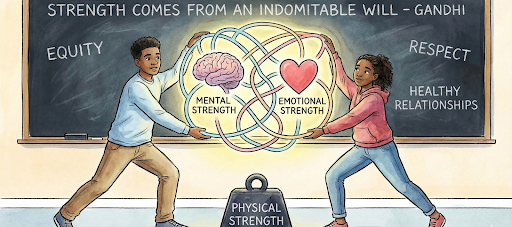
Moving beyond the basics, we explored how meaningful connections are built on respect and equality and how they are dismantled by gender stereotypes. A key focus was analysing the statement "Men are stronger than women."
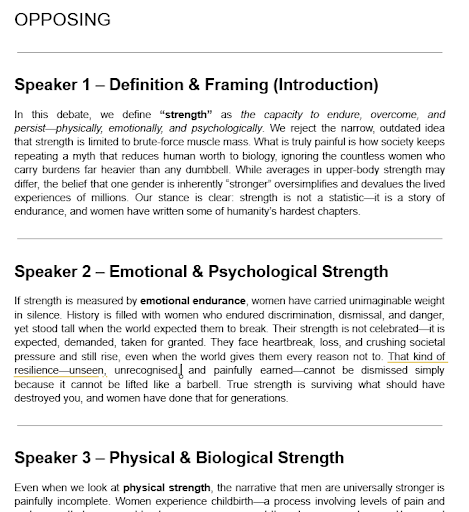
Rather than accepting this at face value, students engaged in a spirited debate. They effectively argued that focusing solely on physical strength overshadows the vital value of emotional and mental strength, revealing how such stereotypes perpetuate misogynistic beliefs.
We did not just talk; we practised. Through role-playing, students rehearsed standing up to controlling behaviours and using effective communication. As we conclude this unit, students are now equipped with a deeper understanding of how to advocate for themselves and others.
We leave you with a thought that perfectly summarises our classroom debate:
"Strength does not come from physical capacity. It comes from an indomitable will." — Mahatma Gandhi
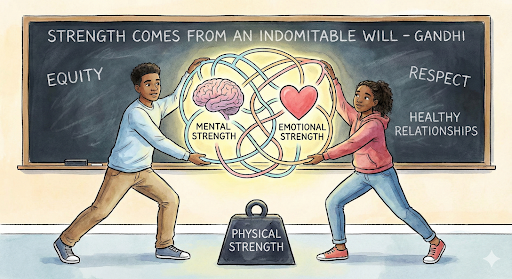
Sample debate notes from opposing side
Year 11 PSHE – Independence in Action
Overview of the Half-Term Theme
This half term, Year 11 PSHCE has focused on the theme of Independence, designed deliberately to support students at a critical transition point as they prepare for post-16 pathways and adult life. Through seven structured sessions, pupils explored personal, emotional, financial and societal aspects of independence, moving from defining key concepts to planning practical next steps for their own futures.
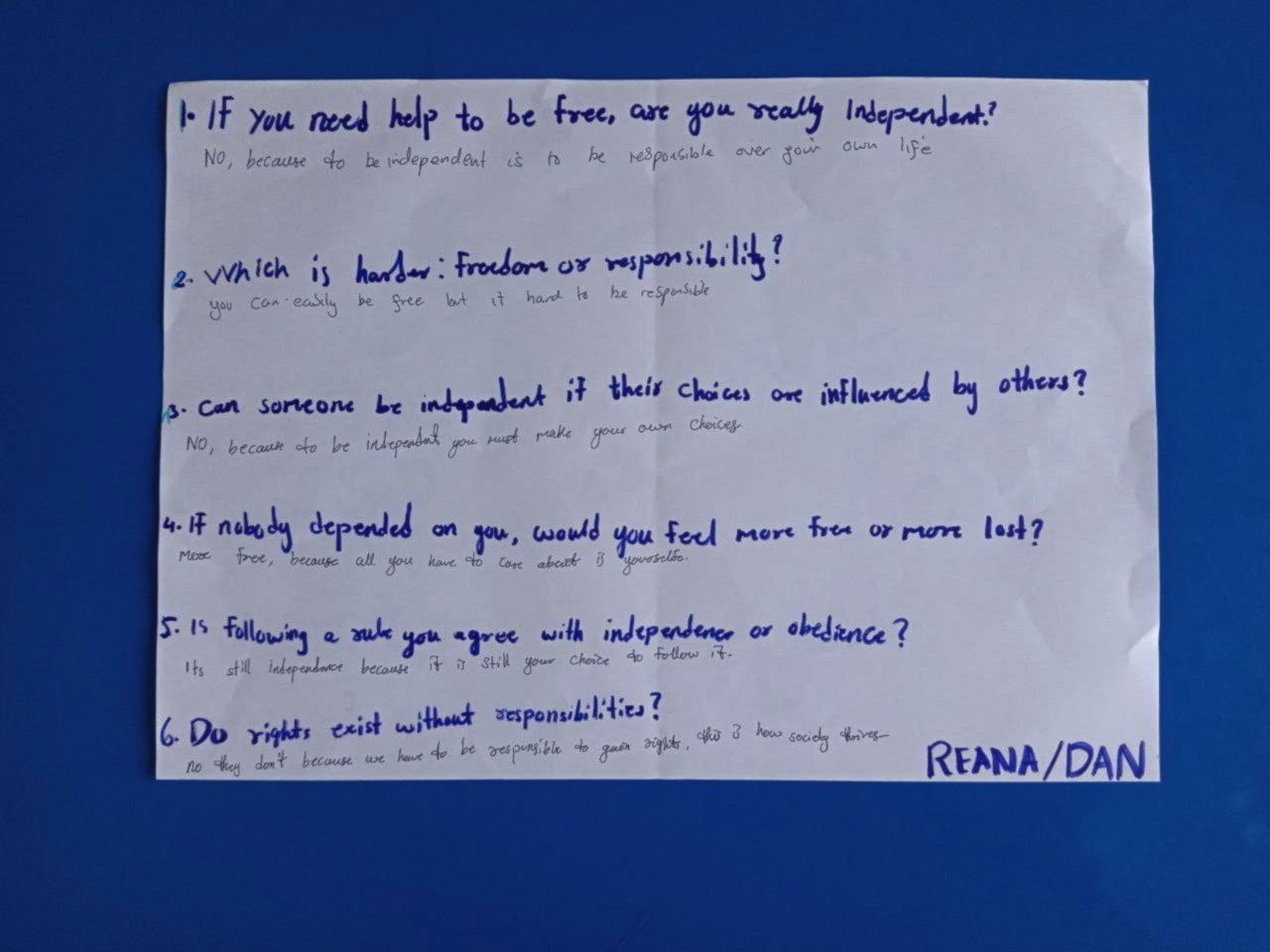
The programme used enquiry-based “thunks” to spark discussion and challenge assumptions. This approach encouraged students to see independence not simply as “doing what you want”, but as a balance between freedom and responsibility, and between self-reliance and healthy interdependence.
Developing Personal Independence
In the opening sessions, students revisited the definition of independence across personal, emotional, financial, academic and social domains. They distinguished independence from simple freedom, recognising that making independent choices also involves accepting the consequences of those choices. Pupils shared examples from home, school and the wider community and reflected on “first moments” of feeling genuinely independent.
A key strand was independence at home and school. Students looked at ways to make considered decisions, manage household responsibilities and take ownership of their academic progress. The “independence diary” activity, where students tracked one independent act per day, helped many to notice small daily behaviours, such as completing homework without reminders or proactively seeking help, as meaningful steps towards maturity.
Emotional and Financial Independence
The unit placed strong emphasis on emotional independence. Students discussed what it means to manage emotions without relying on constant validation from others, especially in the context of social media. Scenario cards enabled them to compare dependent reactions with more independent, regulated responses. Breathing exercises and journaling techniques gave pupils concrete strategies for self-regulation and resilience during stressful periods such as mock examinations.
In the financial independence session, students were introduced to basic concepts of budgeting, saving and distinguishing between wants and needs. Using a “budget challenge”, they planned a simple weekly allowance and debated issues such as borrowing money from friends. This helped them to see that financial independence is not about having a large income but about managing money responsibly and making informed, ethical choices.
Preparing for Life Beyond School
This session looked explicitly at life after school, asking what independence should look like in further education, training or employment. Students identified practical life skills needed for independent living, including basic cooking, laundry, cleaning, using public transport, managing deadlines, professional communication, simple budgeting and maintaining healthy relationships and boundaries.
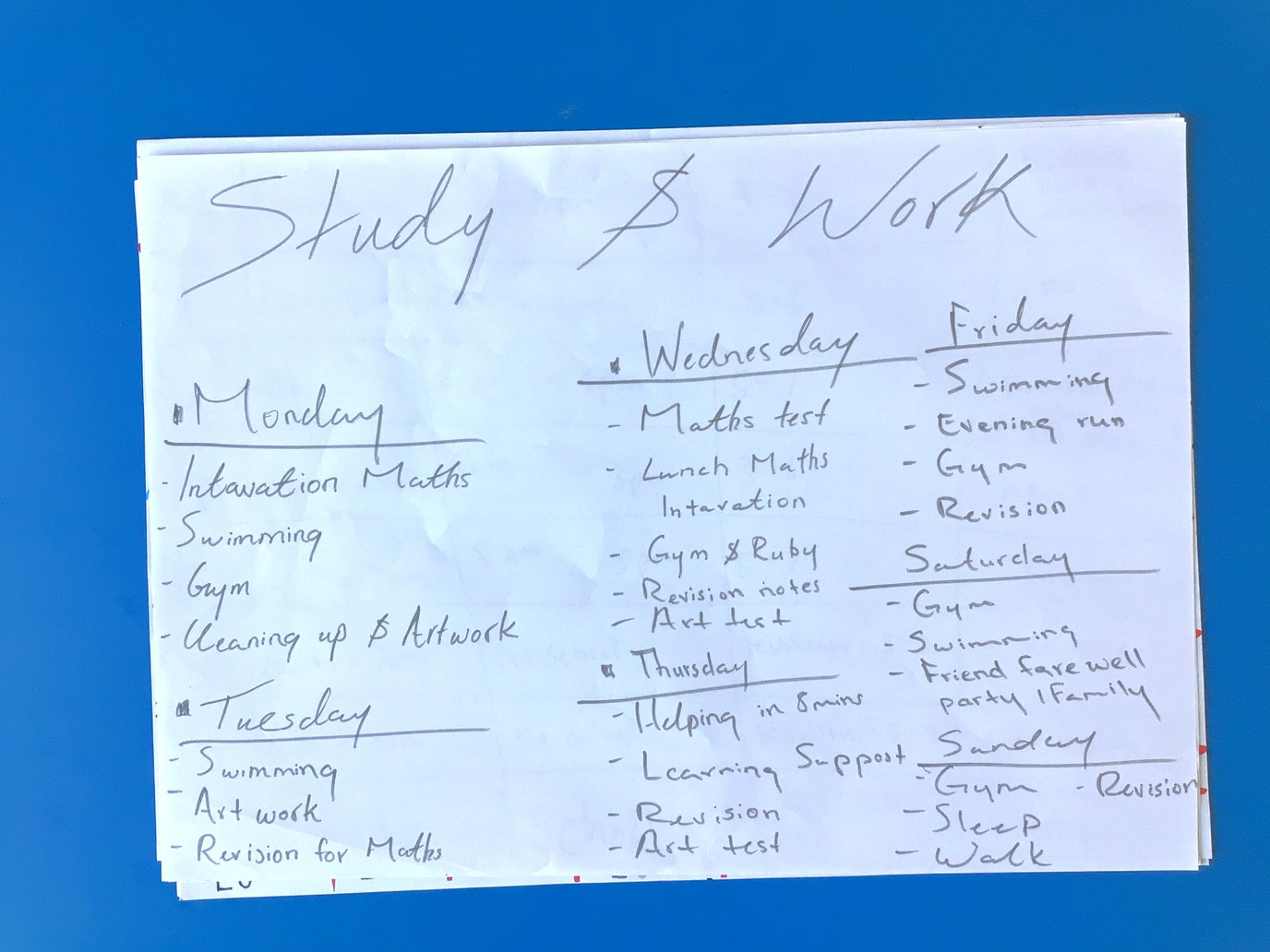
Learners budgeted a sample monthly amount, designed simple cleaning and cooking rotas, planned a week around multiple deadlines. This practical, hands-on approach made the concept of independence concrete and relevant to their immediate future.
Through the “My Independence Roadmap” activity, students mapped out short-term (0–6 months) and longer-term (3–5 years) goals, identifying key skills to develop and support people or resources they can draw on. The “Advice to Future Me” task encouraged pupils to articulate, in their own words, what independence should look and feel like for them, reinforcing the idea that it is a long-term journey shaped by everyday decisions.
Impact and Next Steps
By the end of the half term, most Year 11 students were able to:
- Define independence across several domains and explain how it changes over time.
- Recognise the link between independence and responsibility, including the importance of owning their decisions.
- Describe practical strategies for managing emotions, finances and time more independently.
- Reflect on the influence of peers, family, technology and society on their choices, and consider how to maintain their own values.
- Set realistic, time-bound goals related to life after school and identify specific skills they need to build.
As Year 11s move further into examination preparation and post-16 planning, future PSHE work will build on this foundation by revisiting independence in the context of examination stress, digital balance, relationships and post-school transitions. The aim is that students not only understand independence as a concept but also continue to practise it in small, deliberate steps, turning this half term’s learning into confident, responsible choices beyond the classroom.
Mr Morang’a and Mr Wanjohi
Year 12 - Explore “Readiness for Work”
This term, our Year 12 students have been deeply engaged in a series of PSHE lessons focused on Readiness for Work, equipping them with the knowledge, skills, and confidence needed to navigate future career pathways.
One of the key areas explored was enterprise, where students learned how to adopt an enterprising mindset both in life and in the workplace. They reflected on how creativity, initiative, and problem-solving can open doors to new opportunities.
Students also took time to evaluate their personal strengths, skills, and interests, considering how these qualities align with different roles in an increasingly global job market. Through discussions and activities, they gained insight into the wide range of career opportunities available worldwide, helping them broaden their aspirations and understand emerging trends in the global economy.
Another important focus was professional conduct. Students learned about workplace behaviour, expectations, and the interpersonal skills required to build positive professional relationships. This included examining the serious issues of bullying and harassment in the workplace, identifying what these behaviours look like, how they impact individuals and organisations, and what steps can be taken to prevent or report them.
The lessons also addressed overcoming challenges and adversity in professional settings. Students discussed real-world scenarios and explored strategies for resilience, adaptability, and effective decision-making essential skills for thriving in any career.
To round off the unit, Year 12s are going to explore the roles of trade unions and professional organisations, gaining an understanding of how these bodies support workers, protect rights, and promote professional standards.
Overall, the “Readiness for Work” unit equipped students with valuable knowledge and practical skills that will support them not only in their future careers, but also in becoming confident, responsible young adults ready to step into the world beyond school.
Year 13 - Intimate Relationships
Over the past few weeks, our PSHE lessons have focused on helping students understand themselves and their relationships in a healthy and responsible way. Classes have looked at what intimacy means in emotional, physical, and digital contexts, and how personal values shape the choices young people make. Students have discussed respect, shared values, and the role of trust in any close relationship. They have also examined how harmful attitudes, such as misogyny and rigid gender expectations, influence behaviour and affect the quality of interactions between people. Through debates, reflection tasks, and media analysis, students have been encouraged to think carefully about the kind of relationships they want to build in the future.
We have also covered consent, communication, contraception, and the wider realities linked to fertility, pregnancy, and young parenthood. Students have practised assertive communication, completed activities on decision-making, and learned where to access reliable information and local health services. Lessons on fertility, unintended pregnancy, miscarriage, and support pathways have helped students understand both the emotional and practical aspects of these topics. Throughout the unit, the aim has been to give students clear knowledge, grounded guidance, and space to reflect on their own values so they can make responsible decisions now and later in life.
Ms Ohaga