Secondary Geography News
9th May 2026
The BMIS Geographer – Year 7
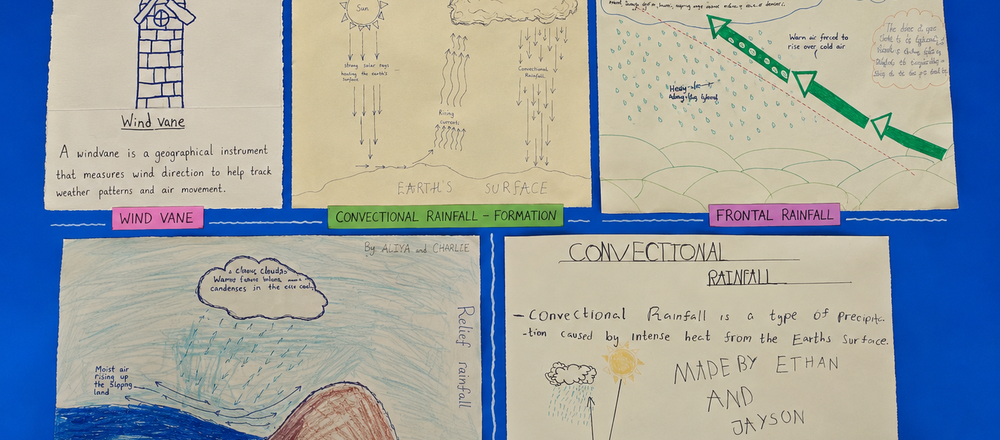
Year 7 geographers have been exploring the fascinating world of weather and climate, developing both their geographical knowledge and their creativity as they investigated how the atmosphere shapes the world around us. Through diagrams, posters and class discussion, students examined key ideas such as rainfall types, weather instruments and the difference between short-term weather conditions and long-term climate patterns. Their work showed growing confidence in using geographical language and explaining processes clearly, from convectional and frontal rainfall to the role of instruments such as the wind vane in observing the weather. It has been exciting to see learners combine careful observation with imagination, proving that geography is not only about understanding the Earth, but also about interpreting the many forces that make our planet dynamic and alive.
The BMIS Geographer now knows that…
a wind vane does not show where the wind is going to — it shows the direction the wind is coming from.
Miss Sylvia Oira
The BMIS Geographer: Climate Voices from Year 8
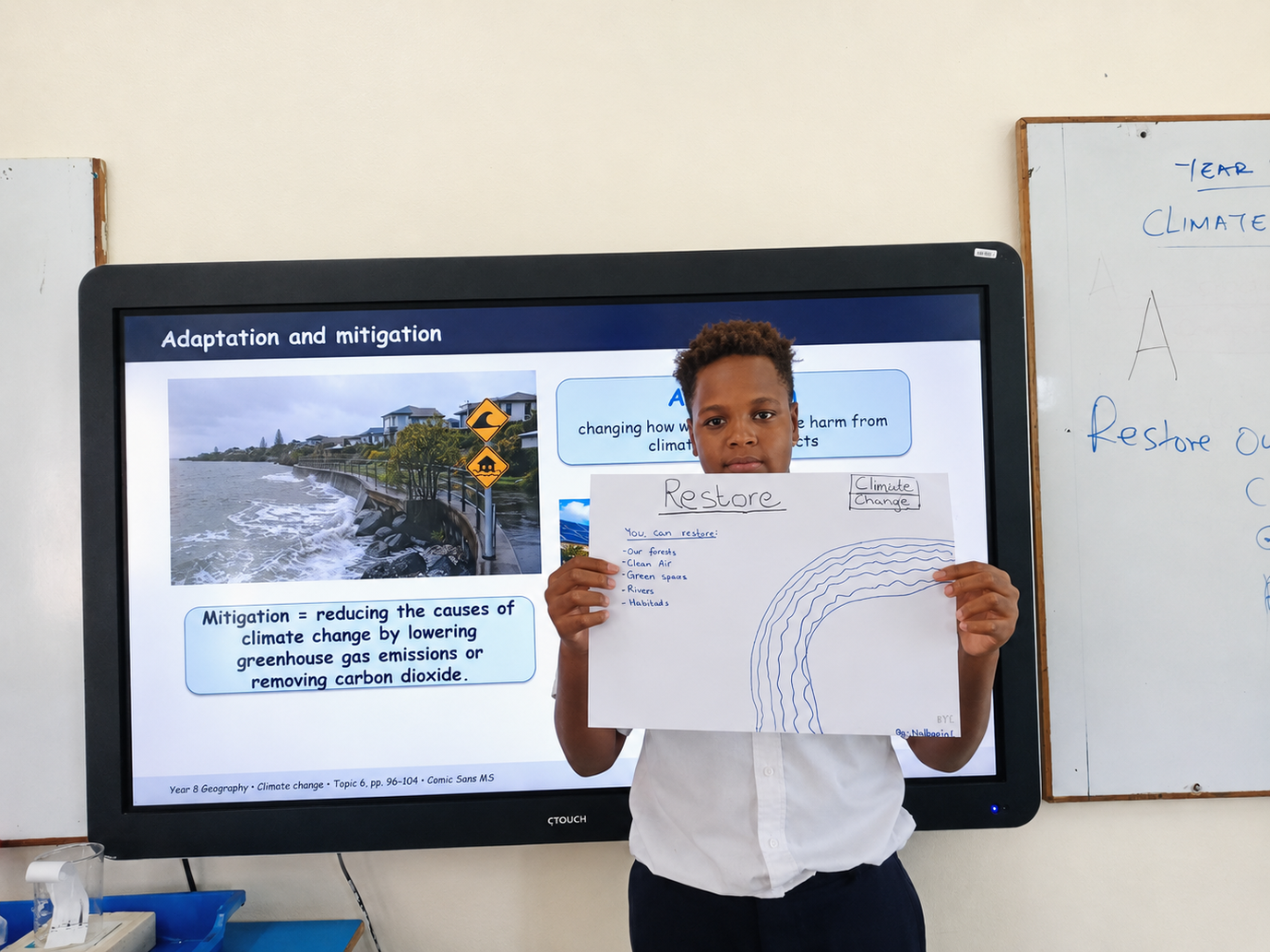
Three weeks into Term 3, Year 8 Geographers have made a thoughtful start to their study of climate change. The focus has been on understanding how climate change affects people, places and ecosystems, while learning to separate human impacts from environmental impacts. Students have explored how rising temperatures, changing rainfall patterns, sea level rise and extreme weather can affect homes, food supply, health, habitats and biodiversity.
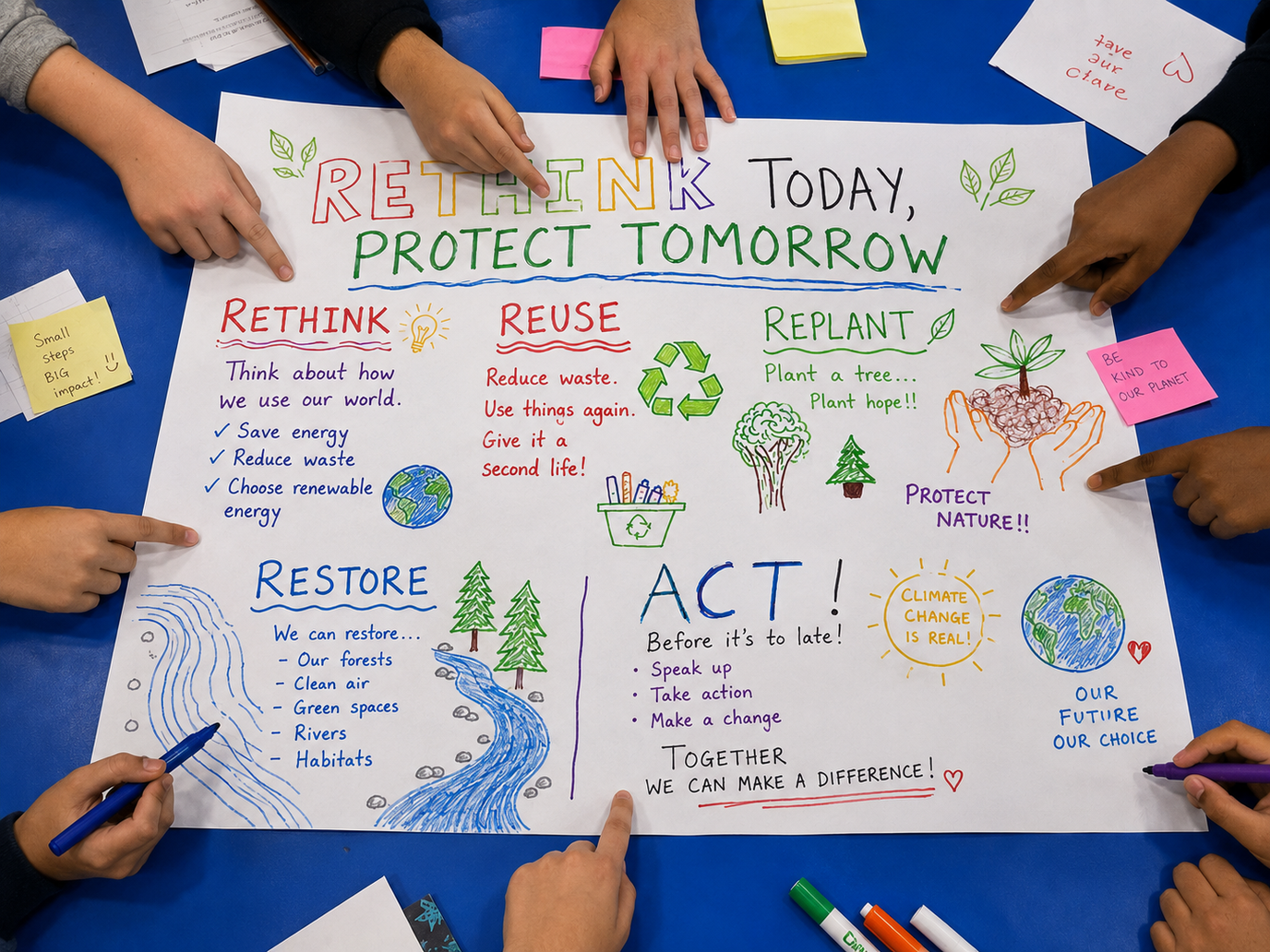
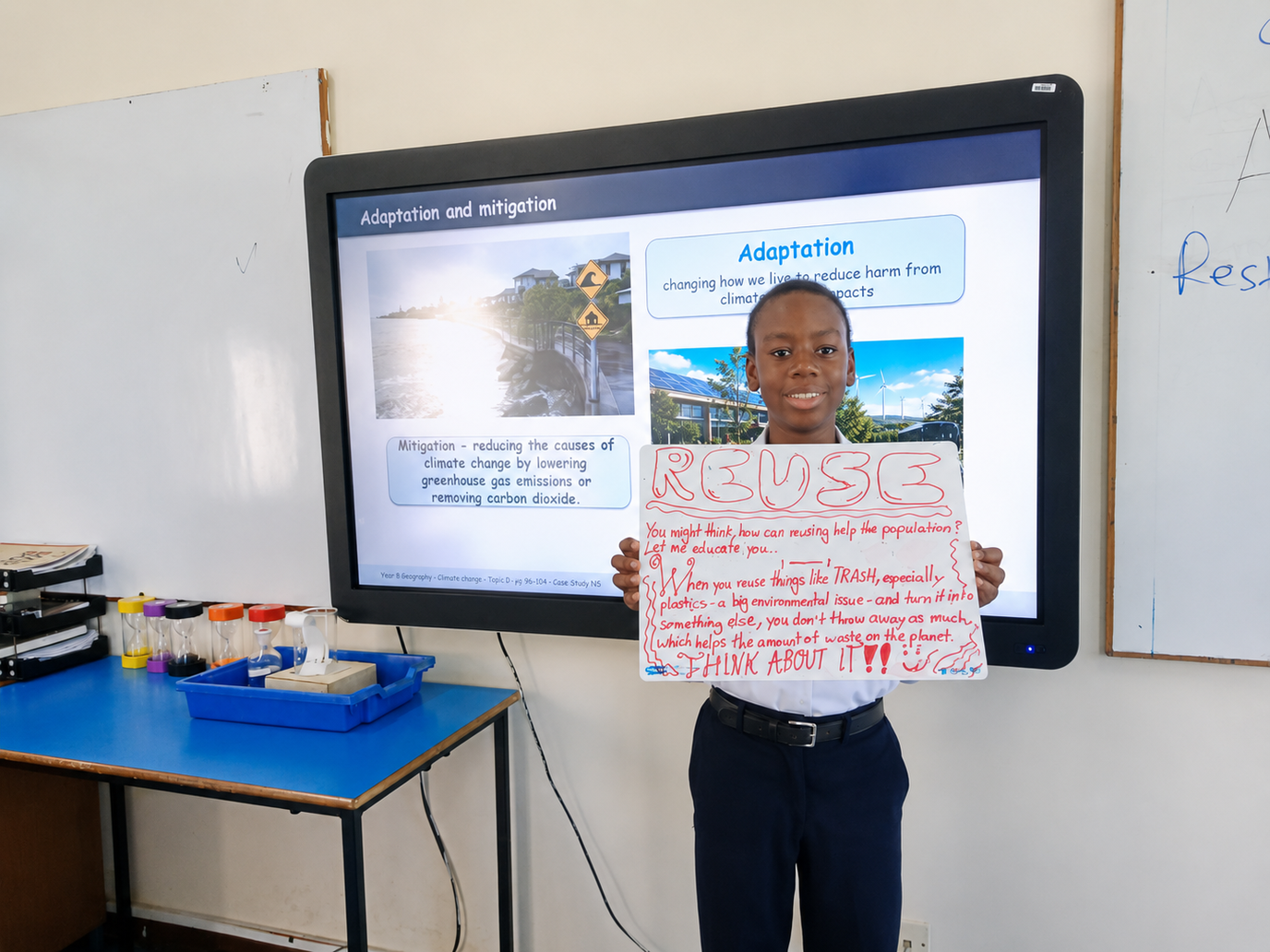
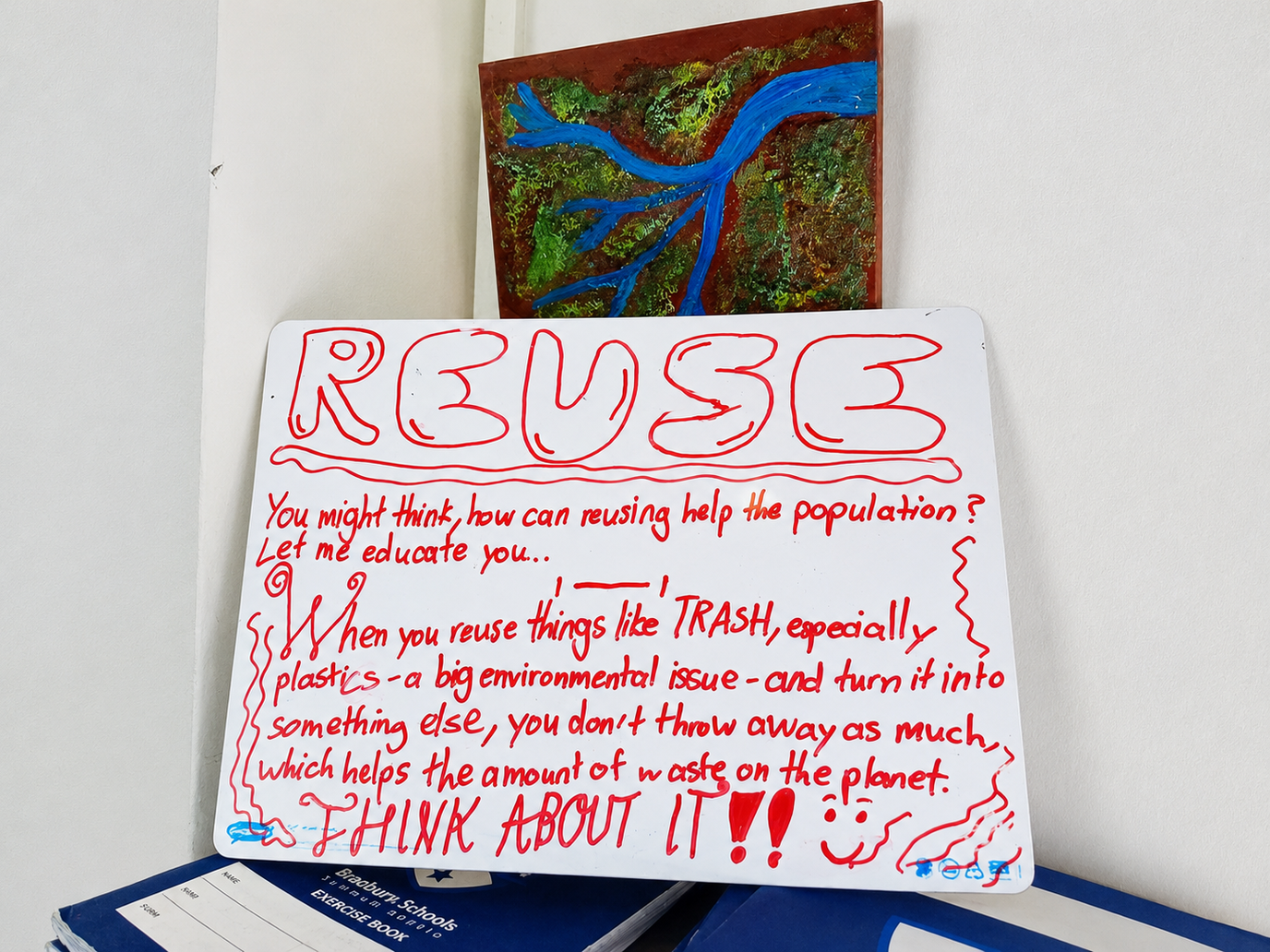
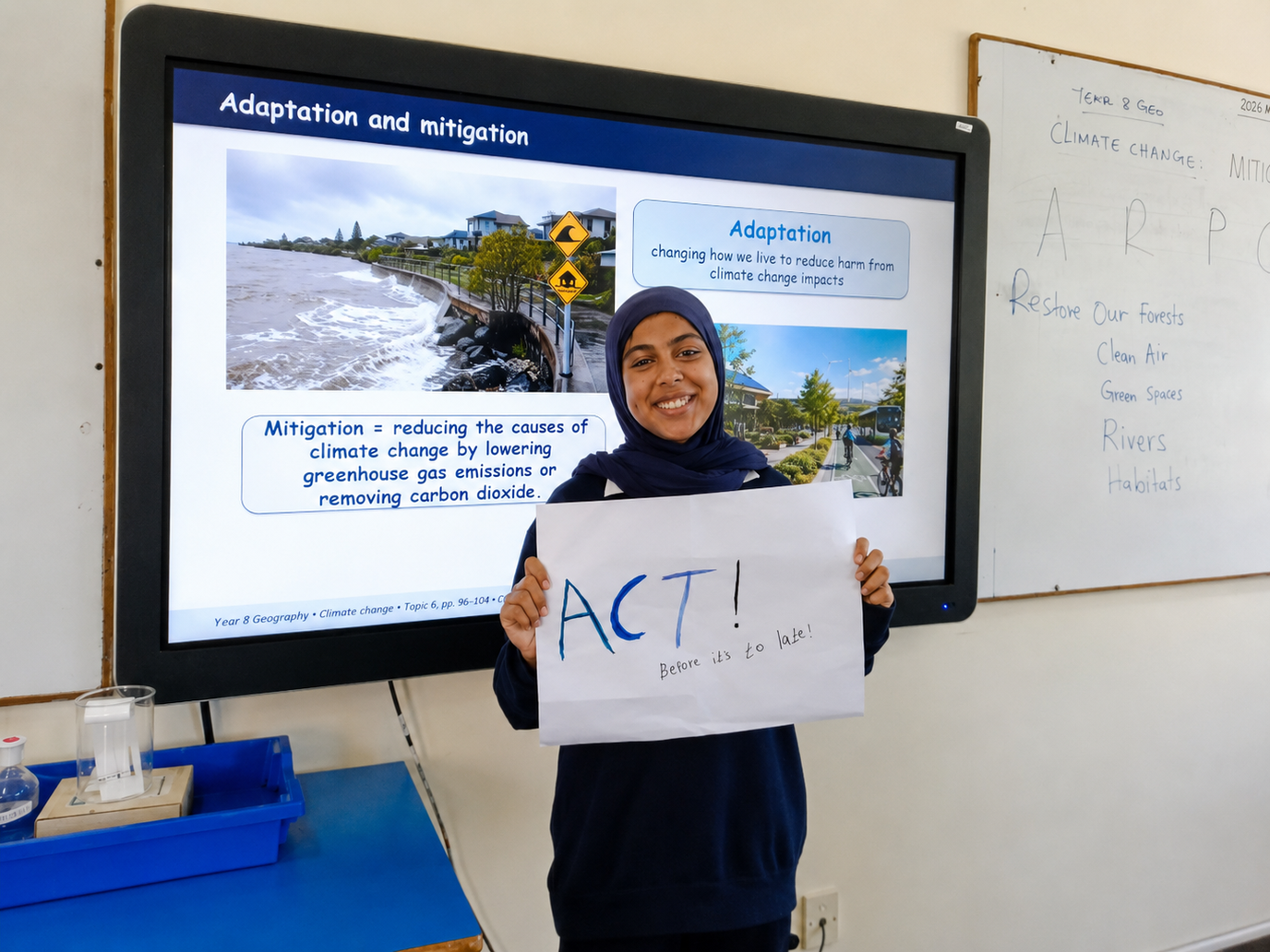
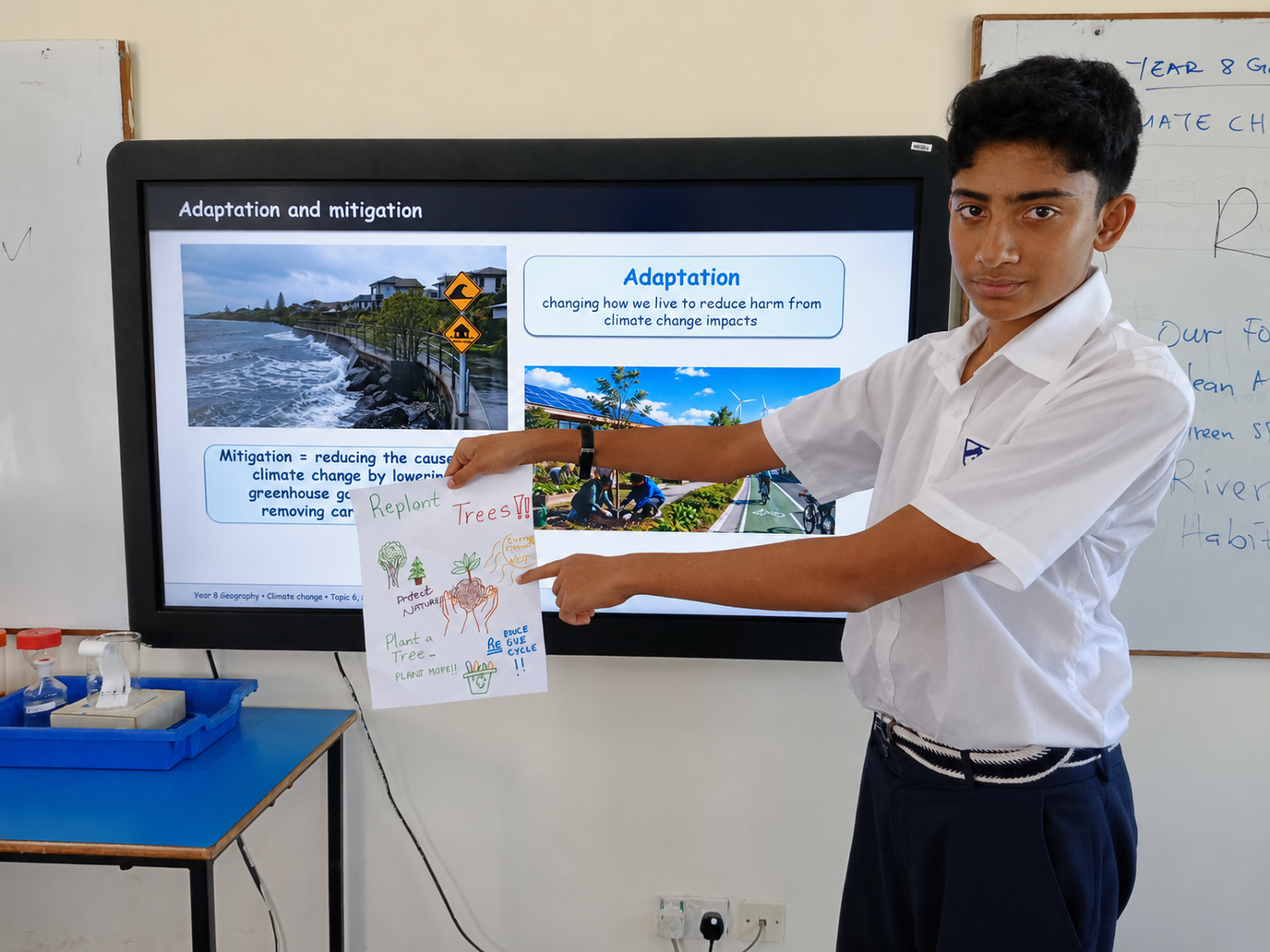
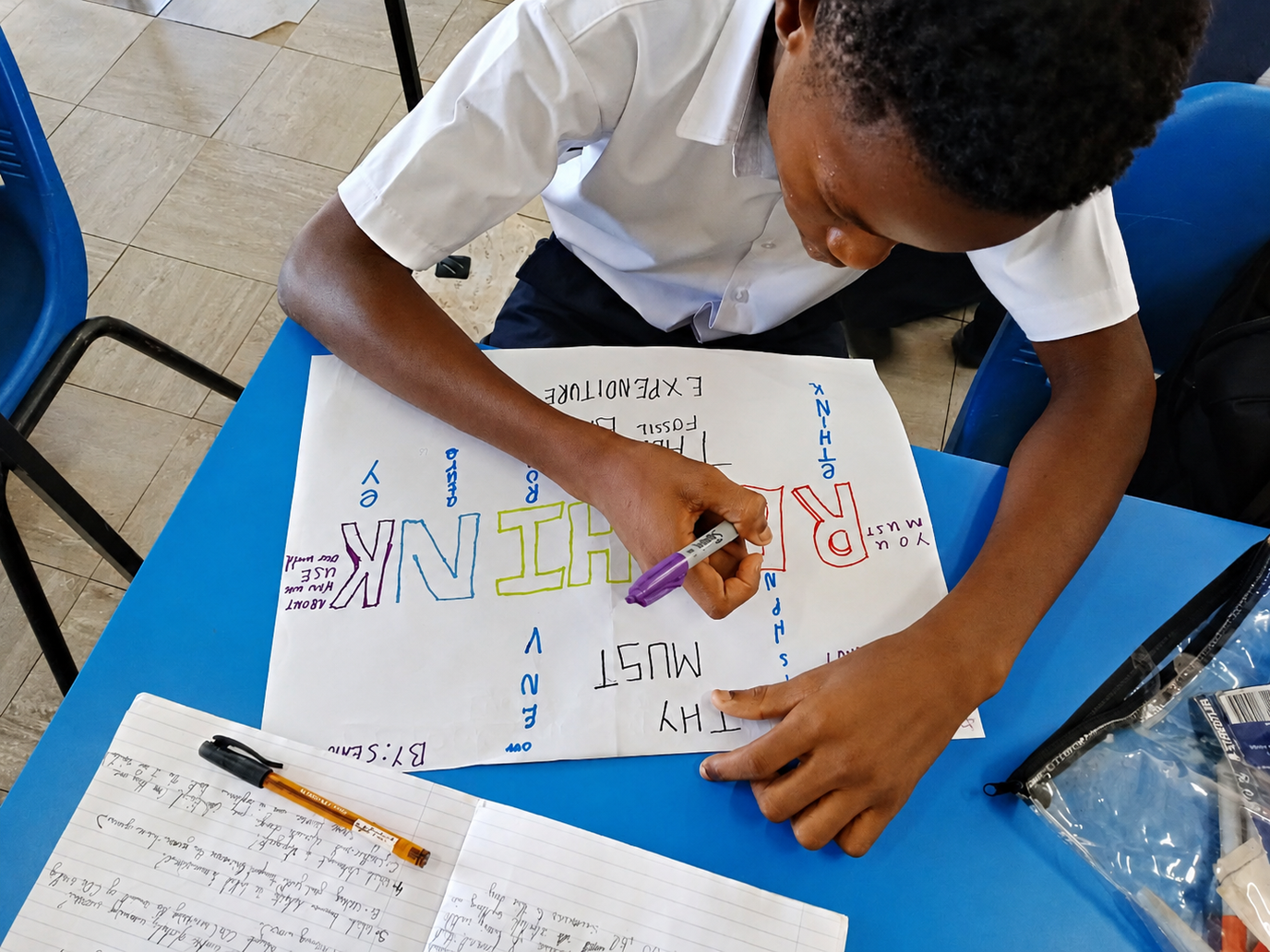
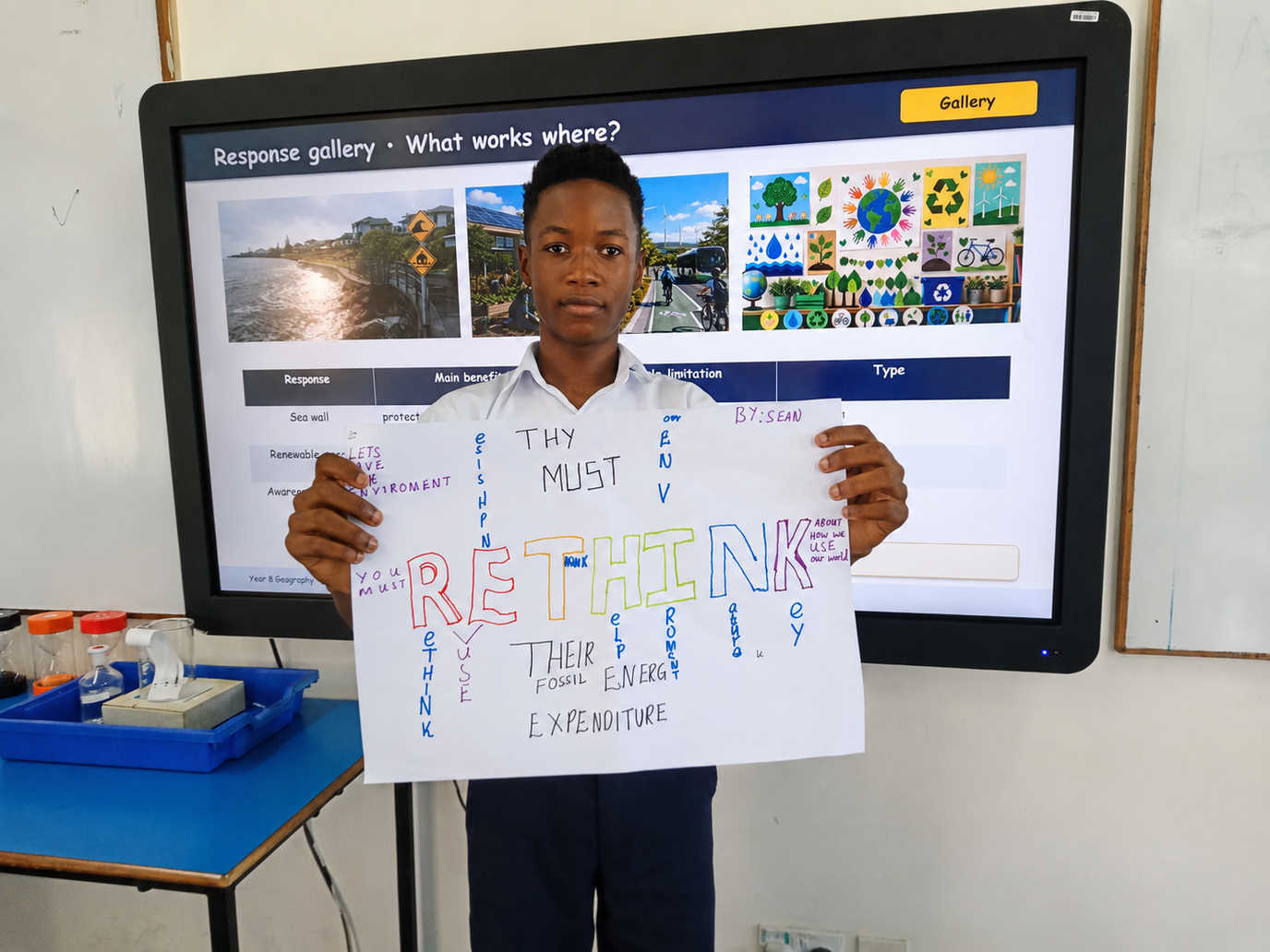
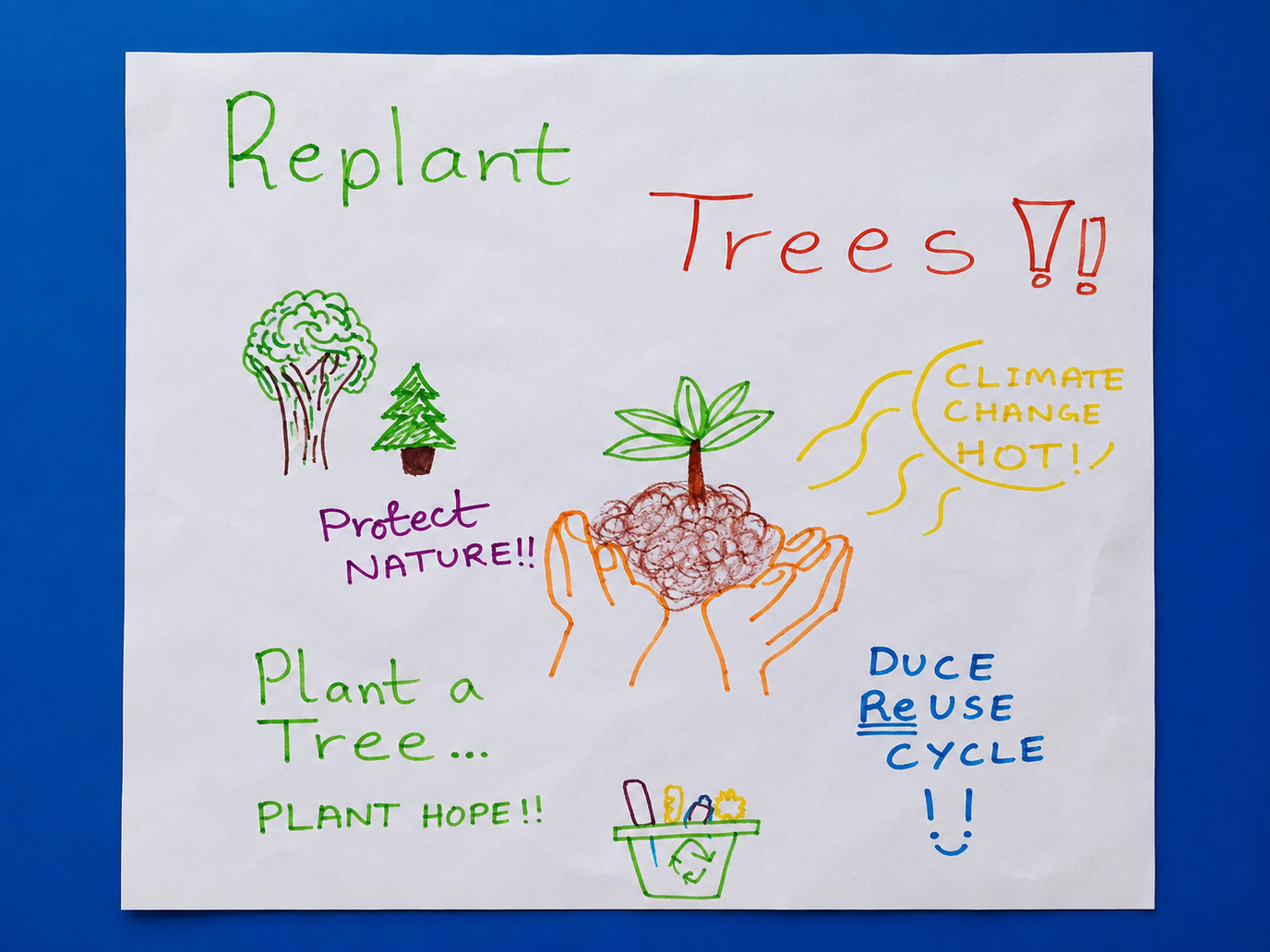
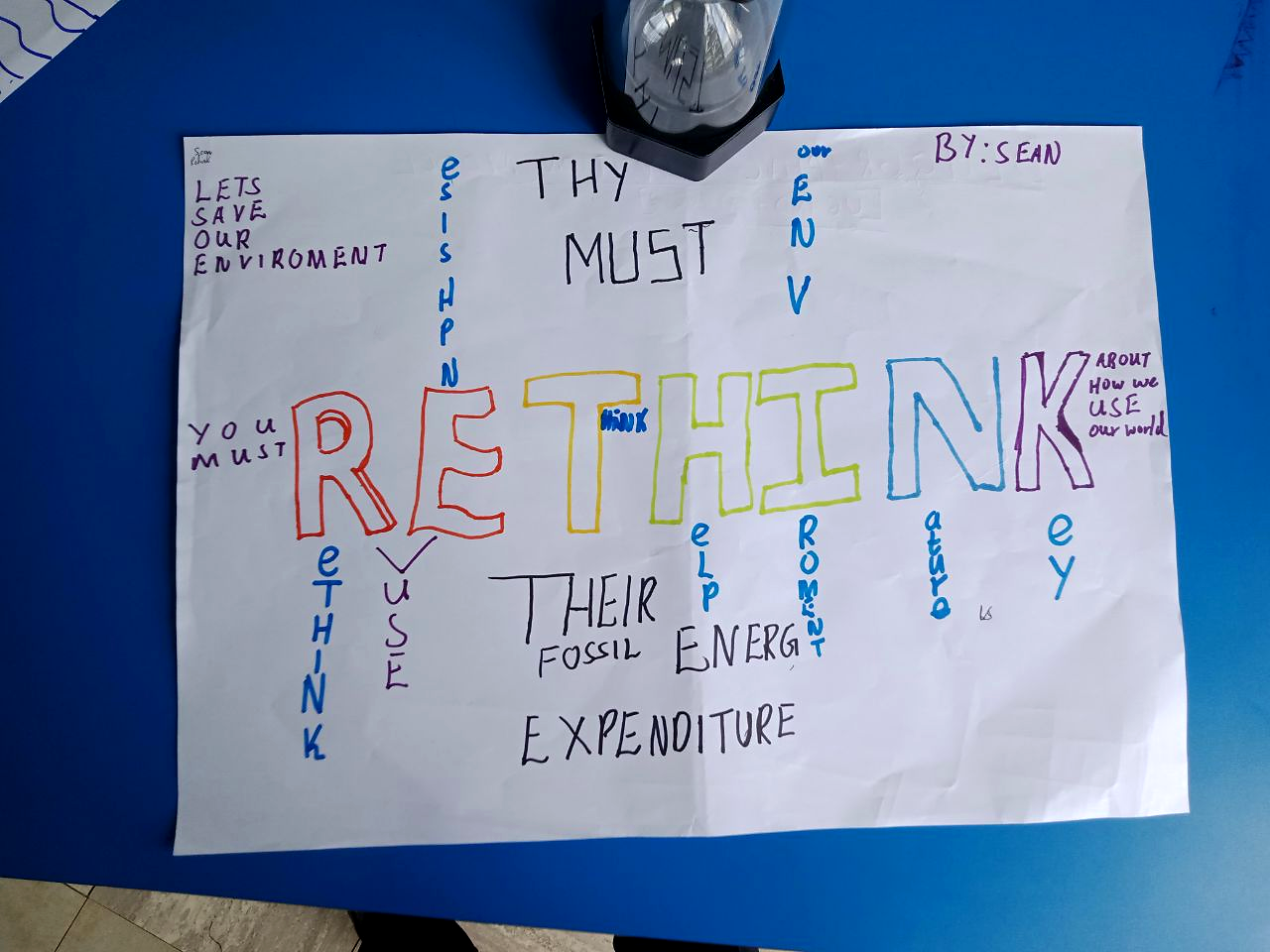
A key part of the learning has been understanding vulnerability. Students discussed why some people and places are affected more severely than others, especially coastal communities, low-income groups, farmers, children, the elderly and people living in areas with limited resources. They then turned this learning into powerful climate awareness messages, using poster campaigns to communicate ideas such as reuse, restore, rethink and act before it is too late. This brought out the voice of the student geographer beautifully: observant, creative and ready to use knowledge to influence choices beyond the classroom.
Did you know?
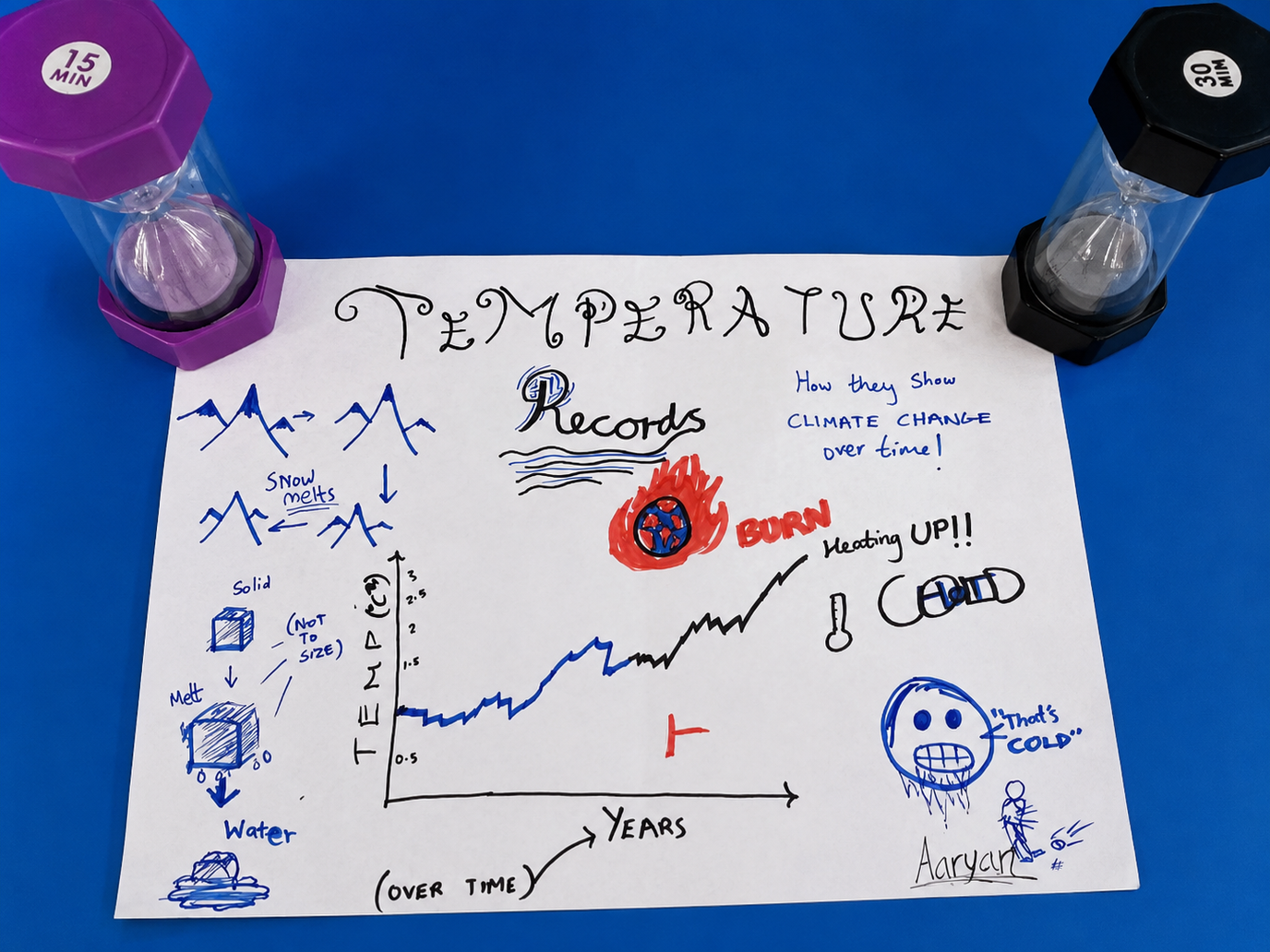
Climate change is more than a warmer planet. NASA explains that it can be seen through rising sea levels, shrinking glaciers, melting ice, stronger heatwaves and changes in where plants and animals can survive. In Year 8 Geography, this has helped students see that climate change is not one single problem, but a chain of changes affecting real people, real places and real ecosystems.
Source: NASA Climate Change, Effects
By Abel Morang’a
The BMIS Geographer: Rivers in Motion from Year 9
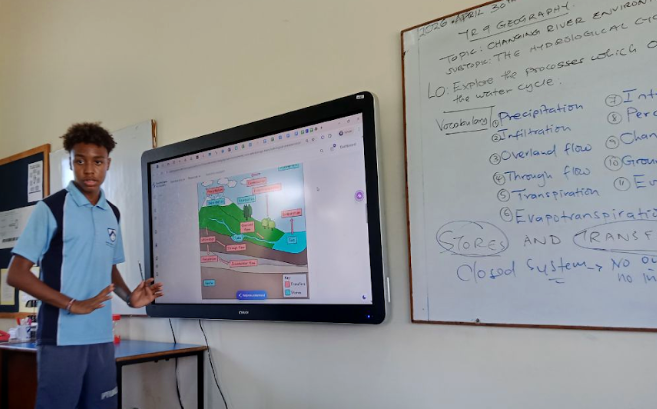
Three weeks into Term 3, and two weeks into their early Cambridge IGCSE Geography journey, Year 9 Geographers have stepped into the course with energy, curiosity and confidence. Their opening topic has been Changing River Environments, beginning with the building blocks of river systems: drainage basins, river characteristics, the Bradshaw Model, river profiles, the water cycle and the key processes that shape river landscapes. Through presentations and classroom discussion, students have started to move from simply naming river features to explaining how a river behaves as a connected system, from source to mouth.
What has made this start especially promising is the way Year 9 students have been welcomed into IGCSE Geography in style. Their learning has not been limited to definitions on the board. Students have been presenting ideas, using diagrams, connecting the water cycle to real river behaviour and beginning to think about sustainability in river management. This reflects the refreshed Cambridge IGCSE Geography direction for 2027 onwards, where learners are expected to apply geographical knowledge to real places, interpret sources, analyse patterns and consider decisions that affect people and environments. It is Geography with purpose: practical, current and full of questions that help students see the world more sharply.
Did you know?
Rivers hold only about 0.0002% of the Earth’s total water, yet they carve valleys, build floodplains, transport sediment, support ecosystems and influence where people settle. Year 9s are discovering that one of the smallest water stores on the planet can also be one of the most powerful forces shaping life on Earth.
Source: USGS Water Science School
By Abel Morang’a
The BMIS Geographer: Population Stories from Year 10
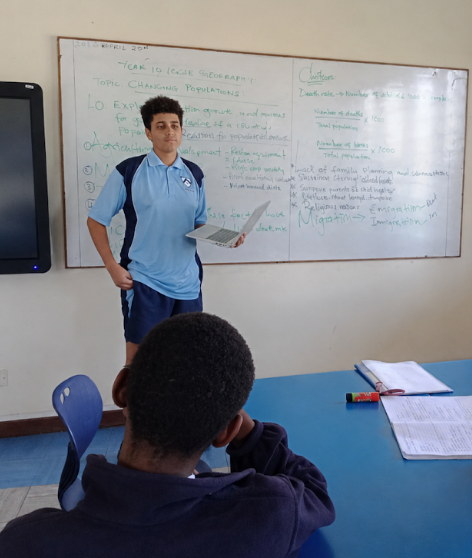
Year 10 students have made a strong start to Term 3 in Geography, settling into the topic of Changing Populations with good focus and discussion. The class has been working through important population ideas such as birth rate, death rate, fertility rate, natural increase and migration, while also learning how these terms help explain what is happening in different countries. They have also begun looking at population policies, including why some governments encourage families to have more children while others try to reduce birth rates.
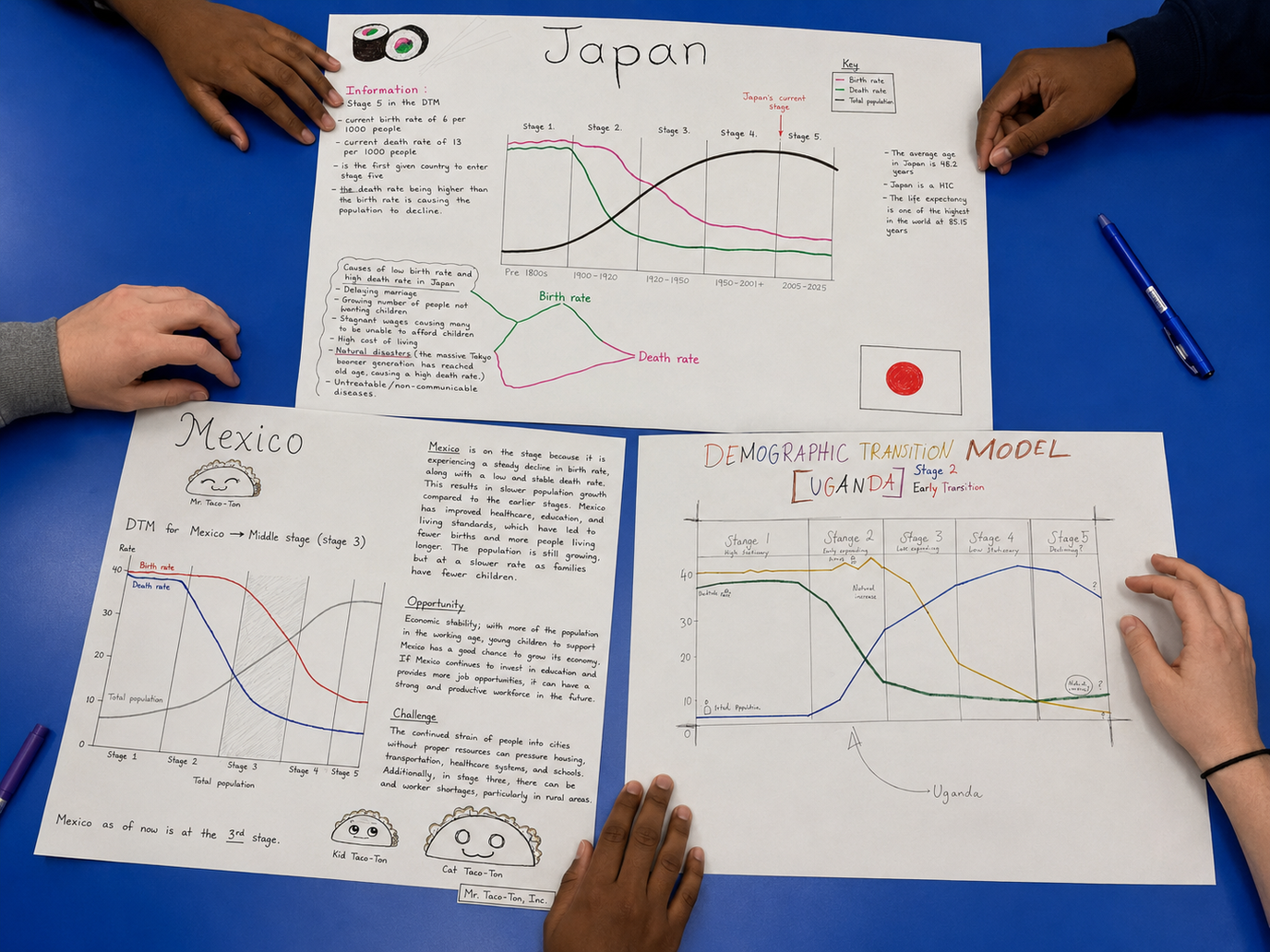
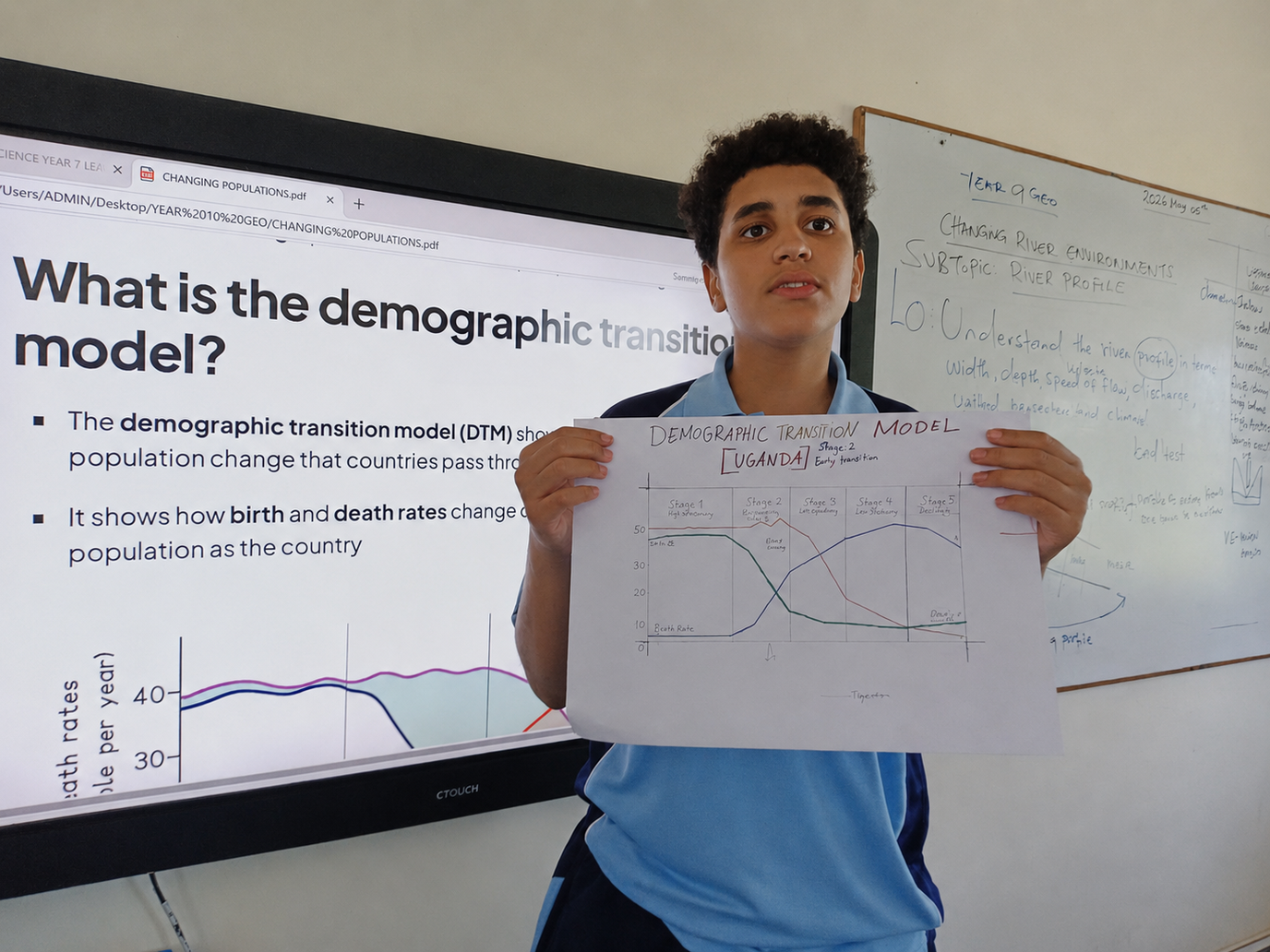
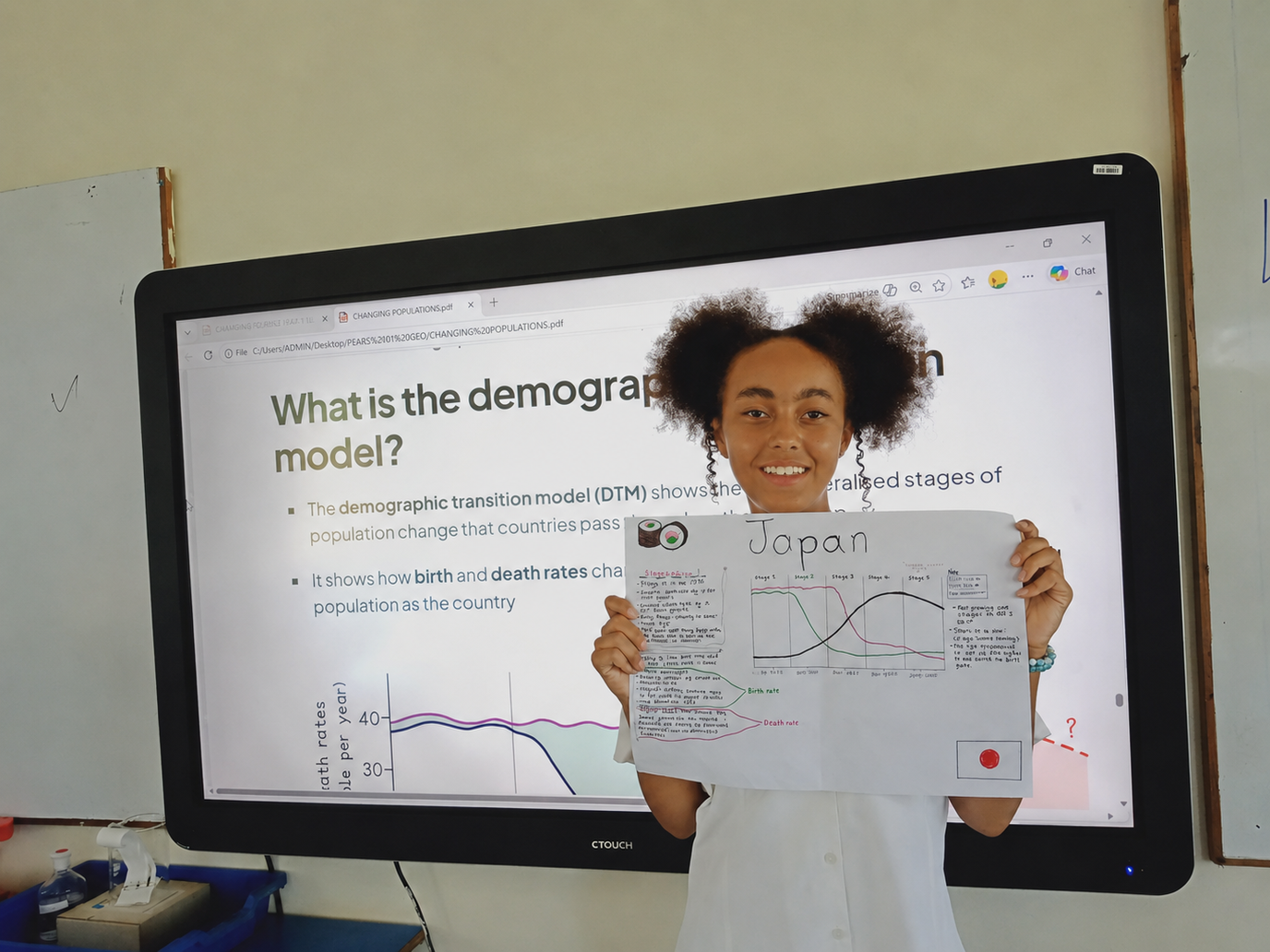
One moment that stood out was the class discussion on the Demographic Transition Model. Students divided the model into three broad development contexts, using Uganda as an example of an LIC, Mexico as an MIC and Japan as an HIC. This helped them compare how population structures change over time, from youthful populations with high birth rates to ageing populations with low fertility and longer life expectancy. Their drawn models showed careful thinking about how demography can shape a country’s future, including pressure on schools and healthcare, the size of the workforce, migration patterns, pensions and long-term planning. This is where Geography becomes more than a topic in class; it becomes a way of understanding how countries prepare for tomorrow.
Did you know?
The United Nations projects that the world’s population will rise from about 8.2 billion in 2024 to a peak of around 10.3 billion in the mid-2080s, before gradually falling to about 10.2 billion by 2100. Even more interesting, one in four people already lives in a country whose population has peaked. This makes the Demographic Transition Model feel very real: some countries are still growing quickly, while others are already asking how to manage ageing, fewer births and a smaller future workforce.
Source: United Nations, World Population Prospects 2024.
By Abel Morang’a